
logo
メッセージを送る

Aging Fleets in Latin America: Choosing a Replacement Car Battery Supplier

September 10, 2026

最新の会社ニュース Aging Fleets in Latin America: Choosing a Replacement Car Battery Supplier

In Mexico, the average vehicle on the road is 16.2 years old. In Brazil, passenger cars average just over eleven years. For a distributor, those numbers create a problem that has little to do with demand volume and everything to do with range: the batteries that fit a fifteen-year spread of vehicle platforms are not the same three or four SKUs that fit this year's models.

That is the practical test of a replacement car battery supplier in this region. Not whether they can ship a container of the highest-volume group size, but whether they can cover the long tail of fitments an old, mixed-origin parc actually requires — and keep covering it order after order.

An Aging Parc Turns Battery Sales Into a Replacement Business

Factory fitment scales with annual vehicle production. Replacement scales with the entire parc divided by battery service life. Where the parc is large and old, the second number is structurally the bigger one.

Under moderate conditions a conventional flooded starter battery generally gives three to five years of service, and hot climates and short-trip urban driving push toward the lower end of that range. Against a sixteen-year-old vehicle, that means the car has already been through several batteries and will need more before it leaves the road.

High under-hood temperatures accelerate grid corrosion and water loss, and frequent short trips leave a battery chronically undercharged — both shorten replacement intervals further. We covered that mechanism in detail in our analysis of how rising heat is reshaping Latin American battery demand, so this article takes the climate effect as given and looks at what an aging parc does to sourcing.

What it does, mainly, is fragment demand. A young fleet concentrates volume into a handful of current fitments. A fifteen-year spread disperses it across superseded group sizes, discontinued platforms and multiple dimensional standards at once. The commercial shape of aftermarket car battery distribution changes accordingly: more SKUs, smaller quantities per SKU, and far more dependence on a replacement car battery supplier who can hold that range.

Replacement Demand Does Not Track New-Vehicle Sales

New-vehicle sales across the region move with credit conditions, exchange rates and import policy, and can swing sharply year to year. Replacement demand is anchored to something slower: the installed base.

When new-vehicle purchases slow, consumers tend to keep existing cars longer, which supports demand for maintenance and replacement parts. The relationship is not mechanical, and local conditions vary — but planning aftermarket inventory against the parc rather than against next quarter's registrations is generally the more stable basis.

This also changes what a supply failure costs. A workshop that cannot get the right group size today sources it elsewhere tomorrow, and that customer often does not return. In a fragmented-fitment market, availability across the range matters more than price on any single line item — which is why continuity of car battery replacement supply tends to outrank unit cost in supplier scoring.

The Fitment Problem: Fifteen Years of Platforms on One Shelf

This is where an old parc gets technically awkward, and it is worth being specific.

Latin American fleets mix Japanese, European, Korean and locally built platforms, and those platforms do not share a dimensional standard. JIS case sizes, BCI group sizes and EN/DIN dimensions all appear in the same market, sometimes in the same workshop on the same day. Terminal type and polarity vary within each. An automotive replacement battery range built around one standard leaves visible gaps.

Age compounds this. Platforms sold ten or fifteen years ago used fitments that current catalogues have quietly dropped. A distributor serving an aging parc needs continued access to those sizes, not just the current top sellers — which is a manufacturing range question, not a warehouse question.

On performance specification, ask for ratings against a named method rather than a headline number. Cold cranking performance for 12 V starter batteries is defined under IEC 60095-1 and, in Europe, EN 50342-1; SAE J537 covers the corresponding North American test procedures. These are separate standards with separate test conditions, so a CCA figure is only comparable when the method is stated. Reserve capacity should be quoted alongside it, since an older vehicle with degraded charging performance and added electrical accessories draws on it more heavily. For an automotive replacement battery going into a high-mileage vehicle, that figure often matters more in the field than peak cranking output.

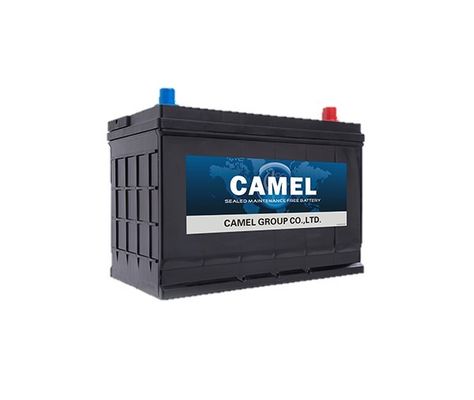
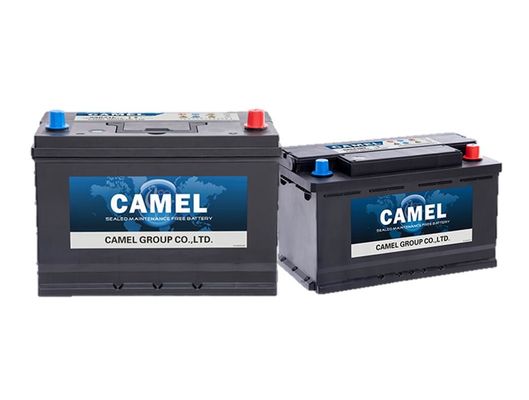
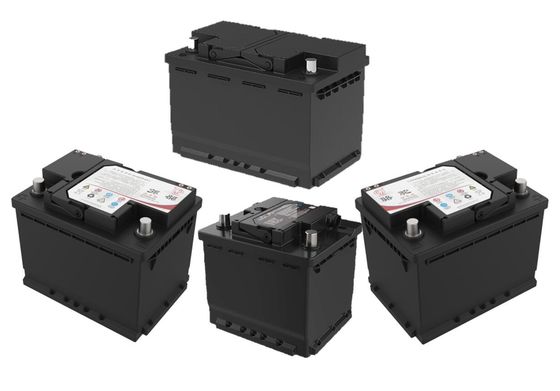
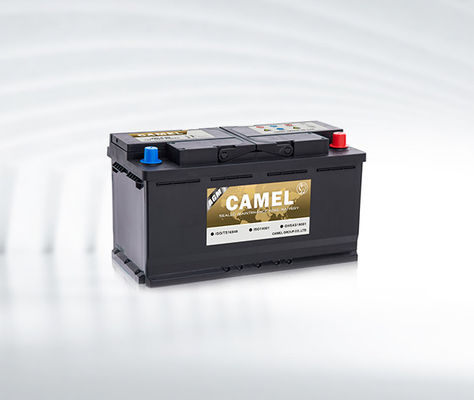
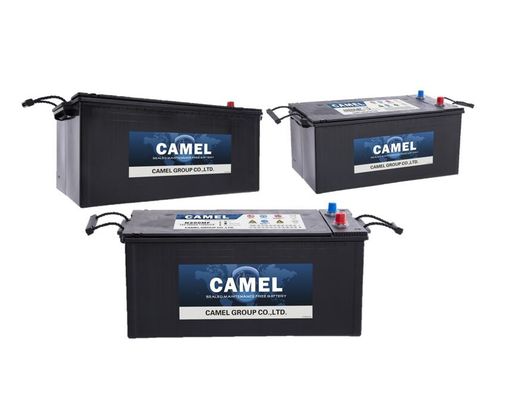
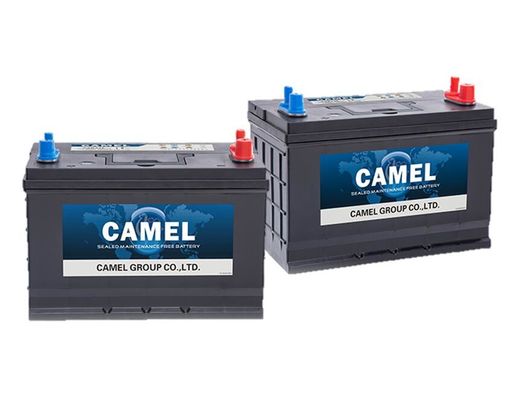
Camel Group's automotive range is built across these standards rather than within one of them, spanning BCI car starter batteries, EN car starter batteries and JIS SUV car starter batteries — which is the coverage profile a mixed, aging parc requires.

What to Look for in a Replacement Car Battery Supplier

Beyond the standard commercial terms, four questions separate suppliers in this specific segment.

How is fitment data maintained, and how far back does it go? Ask how many product types the range covers and whether superseded fitments remain available. A catalogue that tracks only current platforms is a poor match for a parc averaging well over a decade.

Can mixed-SKU orders be shipped economically? Fragmented demand only works commercially if the supplier can build a container from many fitments in moderate quantities, rather than requiring single-model volumes per line.

What is the state of charge on arrival, and what is the shelf life before recharge? Batteries self-discharge in transit and storage. A shipment landing at low open-circuit voltage generates warranty claims that have nothing to do with the vehicle. A capable replacement car battery supplier will specify both figures rather than treat them as a shipping detail.

What quality-system and OEM evidence is available? IATF 16949 certification indicates automotive-grade process control, and OEM supply experience can be a useful indicator of quality-process maturity when it is backed by documented systems and customer audits. Camel Group, founded in 1980 and exporting to more than 80 countries, holds vehicle-assembly supply relationships alongside its aftermarket programmes; its quality control documentation sets out the underlying process controls.

Wet, filled lead-acid batteries also ship as UN2794 dangerous goods, so packaging and documentation competence should be confirmed rather than assumed.

Stocking Strategy: Coverage Beats Depth

For an aging parc, inventory strategy inverts the usual instinct. Moderate quantities across many fitments capture more sales than deep stock in a few, because the demand itself is dispersed.

Product mix should also reflect what is actually on the road rather than what is technically newest. Where the parc is predominantly combustion and flex-fuel, maintenance-free flooded starter batteries carry the bulk of volume, with EFB and AGM demand growing from a smaller base as start-stop equipped vehicles gradually age into replacement. Weighting stock toward the fleet as it exists today, while building a supply relationship that can scale into newer chemistries later, is the usual balance.

Sourcing for the Parc You Actually Serve

Latin America's parc is not getting younger, and the sourcing consequence is range rather than volume. Millions of vehicles across a fifteen-year spread of platforms will each need a dependable replacement — in fitments that a current-model catalogue does not fully cover.

If you are evaluating a replacement car battery supplier for an aftermarket programme, start with the ranges built for high-mileage service across multiple dimensional standards: Camel's car starter battery range, the lead acid starter battery line for conventional and flex-fuel fleets, and Camel maintenance-free car batteries for low water consumption in hot climates.

To discuss your specific market requirements or request a quote, reach Camel Group directly at camel@chinacamel.com, or use the [Request a Quote]form on this site. For a broader view of Camel Group's full product portfolio and manufacturing capabilities, visit the corporate site at www.camelbatt.com.


私達と連絡を取ってください
電話番号 : 86 27 52108948
残りの文字数(20/3000)