October 10, 2026

Brazil registered nearly 2.69 million new vehicles in 2025. More than 70% were flex-fuel models capable of running on gasoline, ethanol, or a mixture of both. For distributors looking for a starter battery manufacturer serving Brazil, these figures point to an automotive market where combustion-engine vehicles remain central to both new-vehicle demand and the replacement battery business.
Brazil's market is also supported by an established domestic automotive manufacturing industry. Automakers produce vehicles locally, while an extensive population of vehicles already on the road requires ongoing maintenance and replacement parts.
For battery importers and wholesalers, the opportunity is not simply about the number of new cars sold. It is about understanding the vehicle technologies, battery specifications, and supply requirements behind that demand.
Brazil's Automotive Market: 2.69 Million New Registrations in 2025
Brazil remains the largest automotive market in Latin America.
According to the Brazilian automotive manufacturers' association ANFAVEA, the country registered 2,689,634 new vehicles in 2025, up 2.1% from 2024. The figure covers passenger cars, light commercial vehicles, trucks, and buses.
Local vehicle production reached approximately 2.64 million units, representing a 3.5% year-on-year increase.
These numbers reflect two sides of Brazil's automotive industry: a substantial domestic market for new vehicles and an established manufacturing base.
International automakers, including Volkswagen, General Motors, Stellantis, and Toyota, have manufacturing operations in the country. Their presence has helped establish local vehicle production and an automotive supply chain serving both domestic and export markets.
For the battery industry, however, domestic vehicle production and aftermarket demand should be considered separately.
Original equipment batteries are supplied through automakers' established procurement systems, while replacement batteries reach vehicle owners through distributors, retailers, and repair workshops.
An overseas battery manufacturer entering Brazil may therefore find the aftermarket more accessible than original equipment supply, although both channels require reliable products and consistent technical specifications.
Understanding this distinction helps distributors evaluate where an international supplier can fit into their business.
Why Flex-Fuel Vehicles Still Drive Brazil Car Battery Demand
Flex-fuel vehicles are one of the defining features of Brazil's automotive market.
Unlike gasoline-only vehicles, flex-fuel cars can operate on gasoline, ethanol, or different mixtures of the two. The technology is widely used in Brazilian passenger vehicles and remains central to the country's combustion-engine market.
ANFAVEA reported approximately 1.90 million new flex-fuel vehicle registrations in 2025, equivalent to 70.6% of all new vehicle registrations.
Battery-electric and hybrid vehicle adoption is also growing. Nevertheless, the high share of flex-fuel registrations shows that combustion-engine vehicles continue to represent a substantial part of Brazil's new-vehicle market.
For starter battery suppliers, this has a practical implication.
A conventional combustion engine needs an electrical starting system. In most passenger vehicles, a 12V automotive battery supplies the current needed to crank the engine, alongside supporting other electrical functions.
But a flex fuel car battery is not necessarily a separate battery category.
The fact that an engine can operate on ethanol or gasoline does not, by itself, determine whether the vehicle needs a conventional flooded battery, an Enhanced Flooded Battery (EFB), or an Absorbent Glass Mat (AGM) battery.
The correct choice depends on the vehicle manufacturer's specifications and the demands of its electrical system.
For a Brazil car battery distributor, that means identifying the vehicle applications customers actually service rather than assuming all flex-fuel models share the same battery requirements.
What Brazil's Vehicle Fleet Means for Starter Battery Replacement
New-vehicle registrations are only one source of demand.
Brazil also has an extensive fleet of existing combustion-engine vehicles. As these vehicles remain in service, their starter batteries eventually require replacement.
A starter battery's useful life varies with operating conditions, charging behavior, electrical loads, and battery construction. Replacement intervals cannot be reliably determined from vehicle sales figures alone.
This makes the aftermarket different from original equipment supply.
A battery distributor serving Brazil may need to support several generations of passenger cars and commercial vehicles, each with different battery dimensions, capacity requirements, terminal layouts, and starting-current specifications.
Even within the same vehicle brand, battery requirements can vary by engine, model year, and electrical equipment.
For importers, this creates an inventory challenge: how to maintain sufficient application coverage without purchasing an unnecessarily broad range of batteries.
A useful starting point is to examine the vehicle models and battery specifications most frequently requested by local distributors and workshops.
Sales records, application catalogs, and feedback from repair networks can help identify the most relevant battery specifications before placing bulk orders.
For a Latin America starter battery supplier, Brazil illustrates a wider aftermarket principle: demand comes not only from new vehicles entering service, but also from maintaining the vehicles already on the road.
The opportunity is recurring, but the actual market volume depends on fleet composition, battery replacement cycles, and competition within local distribution channels.
Which Starter Battery Types Should Brazilian Distributors Consider?
Battery selection should start with vehicle compatibility rather than product price alone.
For wholesalers sourcing automotive batteries, three common technologies deserve consideration.
Conventional SLI Batteries
Starting, Lighting, and Ignition (SLI) batteries are widely used in vehicles with conventional combustion-engine starting systems.
These lead-acid batteries are designed to supply high current for engine cranking while supporting basic vehicle electrical requirements.
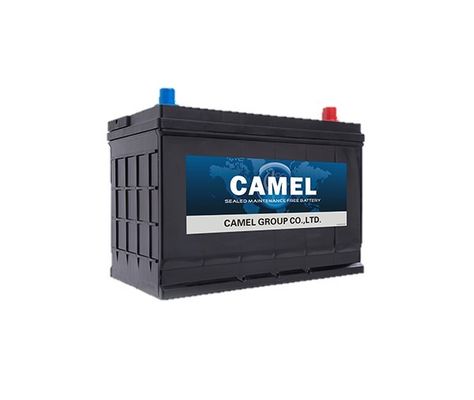
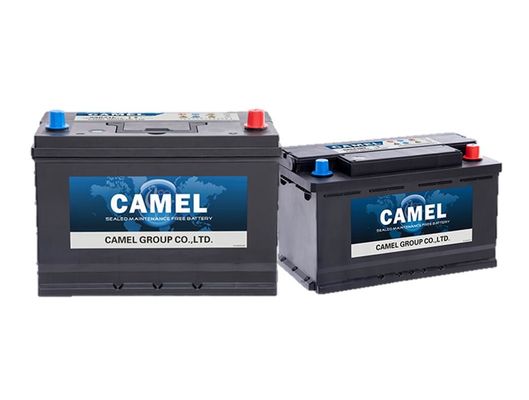
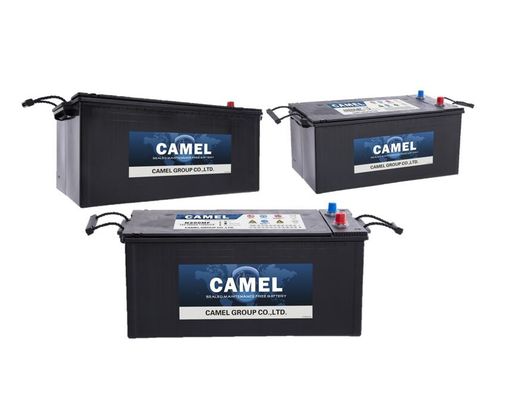
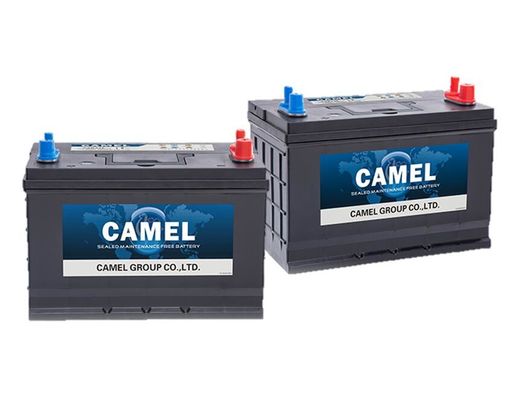
Camel Group's published product range includes maintenance-free 12V starter batteries in EN, JIS, and BCI configurations, with different capacities and physical dimensions.
These product categories can help distributors source batteries for different vehicle applications. However, the applicable battery specification must always be confirmed against the intended vehicle models.
EFB and AGM Batteries
Vehicles equipped with automatic start-stop systems place additional cycling demands on the battery.
EFB and AGM technologies are designed to meet more demanding operating conditions than conventional flooded starter batteries.
An EFB or AGM battery should be selected according to the vehicle manufacturer's requirements, rather than assuming one technology is universally preferable.
These technologies also should not be treated as interchangeable solely because the nominal voltage or capacity is similar.
What Specifications Matter When Importing Car Batteries?
Before confirming an order, distributors should review five key items:
Battery voltage and capacity: Confirm the rated voltage and ampere-hour capacity required by the vehicle application.
Starting-current rating: Compare CCA values using the same test standard, since values measured under different standards are not directly equivalent.
Dimensions and terminal layout: Verify case dimensions, hold-down arrangements, terminal positions, and polarity.
Battery technology: Match conventional SLI, EFB, or AGM technology to the specified vehicle requirements.
Quality and documentation: Request relevant product specifications, test information, and applicable shipping or conformity documentation.
These checks help reduce incorrect product selection, unnecessary inventory variation, and compatibility-related after-sales issues.
Choosing a Starter Battery Manufacturer for Brazil's Aftermarket
Market demand alone does not make a supplier suitable for every distributor.
For buyers importing starter batteries into Brazil, a manufacturer's product range, quality consistency, technical documentation, and ability to support repeat orders are important considerations.
A reliable supplier should be able to explain which battery specifications are available and provide the information needed for application matching.
Product quality also needs to remain consistent across shipments.
For example, batteries ordered under the same specification should meet agreed requirements for capacity, starting performance, physical dimensions, and terminal configuration.
Manufacturers offering different battery technologies can help distributors cover multiple market segments through one sourcing relationship, provided those products match local application needs.
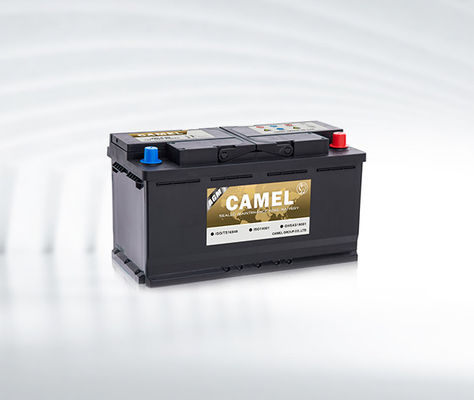
Camel Group, established in 1980, manufactures automotive lead-acid batteries and offers conventional starter batteries as well as EFB and AGM products for start-stop applications. The company serves customers in more than 80 countries.
Its product portfolio includes automotive starter battery categories covering different capacities and vehicle standards.
For buyers evaluating a starter battery manufacturer for Brazil, the first step is to prepare a clear application and purchasing brief.
That brief should identify the required battery types, target vehicle applications, expected order quantities, preferred labeling arrangements, and delivery requirements.
Importers should also verify applicable Brazilian import procedures and product compliance obligations before placing an order.
With these requirements established, technical and commercial discussions become more specific, making it easier to compare potential manufacturers.
Brazil's Combustion Market Remains Relevant to Battery Suppliers
Brazil's automotive market is evolving, and electrified vehicles are becoming more visible. Yet the 2025 figures show that flex-fuel vehicles continue to account for the majority of new registrations.
Combined with local vehicle production and a substantial existing vehicle fleet, this supports continuing demand for automotive starter batteries across original equipment and replacement channels.
For distributors, the commercial opportunity depends on selecting batteries that match local vehicle applications and building a reliable supply arrangement.
Camel Group offers conventional and start-stop automotive battery solutions for international wholesale buyers. Explore its Car Starter Battery, Lead Acid Starter Battery, and Car Start Stop Battery ranges to review available product categories and discuss sourcing requirements.