
November 10, 2026

Heat is one of the most persistent challenges for automotive batteries in tropical markets. In countries such as Malaysia and Indonesia, high ambient temperatures, congested traffic, and prolonged engine operation can expose batteries to demanding thermal conditions throughout the year.
For distributors selecting a car battery for tropical climate applications, the concern extends beyond immediate starting performance. Sustained heat can accelerate internal aging, gradually reducing a battery's capacity and service life.
One contributing factor is water loss. Although it often goes unnoticed until performance deteriorates, excessive water consumption can affect the internal condition of a lead-acid battery long before it fails.
Understanding how heat, water loss, and battery construction interact is an important part of selecting batteries for hot-climate markets.
A lead-acid battery relies on an electrolyte consisting of sulfuric acid and water to support the chemical reactions involved in charging and discharging.
During normal charging, most of the electrical energy restores the battery's active materials. However, particularly near full charge or under overcharging conditions, some energy can drive electrolysis, separating water into hydrogen and oxygen.
When these gases escape, the battery loses water that cannot be replenished in a sealed maintenance-free design.
Temperature plays a significant role in this process.
As battery temperature increases, the voltage at which substantial gassing occurs decreases. Under an unsuitable charging voltage, a hot battery can therefore experience increased gas generation and water consumption.
High temperatures also accelerate other aging mechanisms, including self-discharge and corrosion of the positive grids.
Research published by SAE International in 2021 examined the relationship between lead-acid battery temperature, charging voltage, and electrolyte loss, highlighting the importance of thermal management in automotive battery durability.
This relationship is especially relevant in tropical markets. A vehicle may operate in ambient temperatures above 30°C, while the battery itself can experience significantly higher temperatures depending on its location, engine heat, and ventilation.
A high temperature car battery must therefore be evaluated for prolonged thermal exposure, not simply its ability to deliver starting current on a hot day.
The consequences of battery water loss develop gradually. A battery may continue operating normally while internal deterioration progresses.
In a flooded lead-acid battery, excessive water loss can lower the electrolyte level. If the level falls below the upper portions of the plates, exposed active material can no longer participate effectively in the intended electrochemical reactions.
This can contribute to reduced capacity and irreversible damage.
Water loss also changes the electrolyte's condition. As water decreases, the remaining sulfuric acid becomes more concentrated, potentially increasing the severity of corrosion and other degradation processes.
The effects are not limited to electrolyte depletion.
Positive-grid corrosion is a major contributor to lead-acid battery aging. Higher temperatures accelerate this process, weakening internal structures and reducing the battery's ability to maintain its original performance.
As deterioration accumulates, the battery may lose available capacity and eventually struggle to provide sufficient starting power.
Not all lead-acid batteries manage water in the same way.
Conventional flooded batteries use liquid electrolyte and venting systems, while AGM batteries hold electrolyte in absorbent glass-mat separators.
AGM batteries also incorporate an internal oxygen-recombination mechanism that limits water loss under normal operating conditions.
However, excessive heat or overcharging can overwhelm this mechanism, causing gas to escape through pressure-relief valves. Repeated venting may lead to electrolyte dry-out and declining performance.
This distinction matters when comparing battery technologies.
A battery's resistance to heat-related deterioration depends on its construction, charging conditions, and intended application rather than whether it is simply described as maintenance-free.
A battery intended for hot environments needs more than a general claim of heat resistance.
Several design characteristics influence how a car battery for tropical climate applications responds to sustained thermal exposure.
Battery grids conduct electrical current and support the active material inside each cell.
Their composition can influence corrosion resistance and water consumption.
Modern maintenance-free flooded batteries commonly use lead-calcium alloy systems to help reduce water consumption compared with traditional antimony-based designs.
However, durability depends on the complete grid formulation, manufacturing process, and operating environment. A particular alloy alone does not establish a battery's expected service life.
Water loss control involves the interaction of grid alloys, electrolyte design, charging behavior, and gas management.
In flooded batteries, manufacturers seek to minimize water consumption while maintaining suitable electrolyte conditions throughout the battery's intended service life.
In AGM batteries, the absorbed-electrolyte structure and oxygen-recombination mechanism provide a different approach to managing water loss.
Both technologies can experience accelerated aging under excessive heat.
For buyers, the relevant question is not whether a battery is completely immune to water loss, but how its design and available test results support its intended operating conditions.
Even a well-designed battery can deteriorate prematurely if the charging system is unsuitable.
Lead-acid battery charging requirements are temperature-dependent. At elevated temperatures, excessive charging voltage can increase gassing and water consumption.
Vehicle charging-system behavior should therefore be considered alongside battery specifications.
A heat resistant battery should be evaluated as part of the complete vehicle electrical system, rather than as an isolated component.
For automotive aftermarket distributors, environmental suitability is only one part of battery selection.
The replacement battery must also match the vehicle's electrical requirements, dimensions, terminal layout, and specified technology.
For conventional vehicles, maintenance-free flooded batteries remain a common choice for starting, lighting, and ignition (SLI) applications.
Vehicles equipped with start-stop systems may require EFB or AGM batteries to accommodate more frequent engine starts and greater cycling demands.
These technologies should not be treated as interchangeable solely because their nominal voltage and capacity are similar.
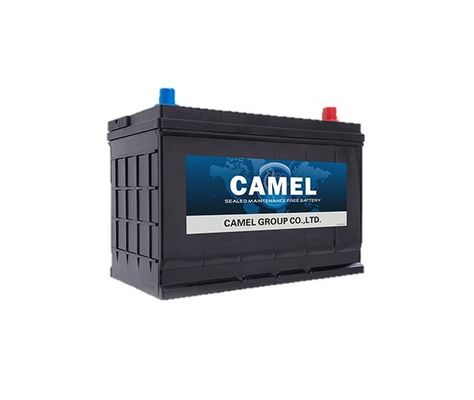
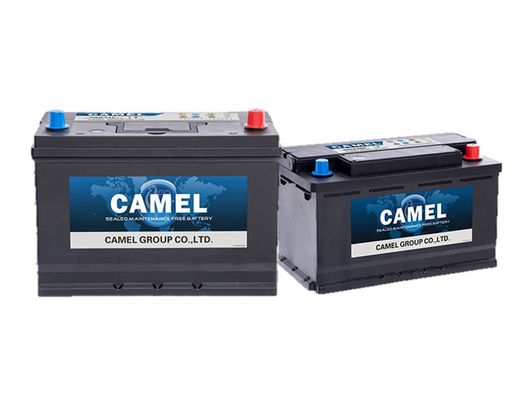
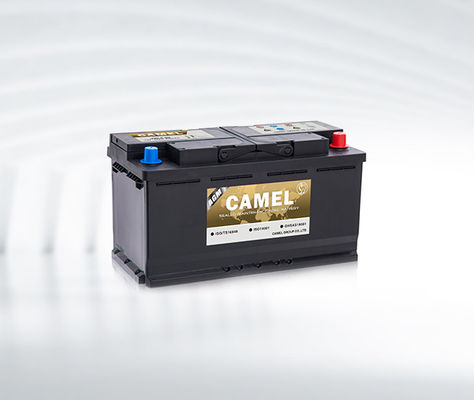
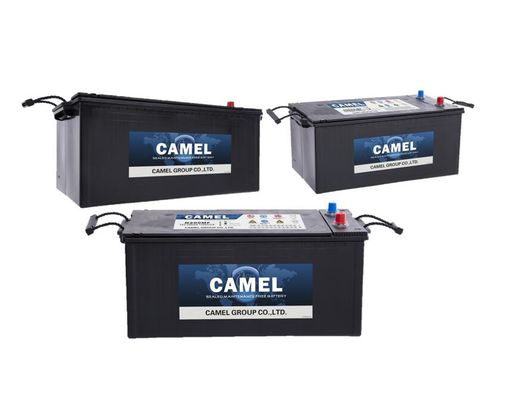
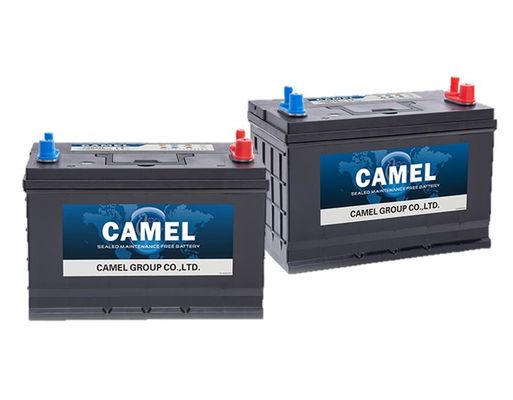
For example, Camel Group offers 12V maintenance-free flooded starter batteries in multiple EN-standard configurations.
Its LB1 range includes the 53646MF, rated at 12V, 36Ah, and 300A CCA (EN), and the 54323MF, rated at 12V, 43Ah, and 410A CCA (EN). Both are listed with dimensions of 207 × 175 × 175 mm.
These specifications illustrate how products within the same physical size category can differ in electrical performance.
They do not, by themselves, establish high-temperature durability.
Camel also manufactures EFB and AGM batteries for start-stop applications. According to the company's published technology information, its EFB development incorporates alloy, lead-paste, and separator technologies intended to improve performance characteristics, including water loss.
For buyers selecting a car battery for tropical climate use, the next step is to confirm the appropriate technology and request relevant technical documentation for the intended market.
For distributors serving Malaysia, Indonesia, and other tropical markets, battery selection can affect replacement reliability, warranty exposure, and customer confidence.
A low initial purchase price may offer limited value if a product experiences premature deterioration under local operating conditions.
When evaluating a supplier, buyers should look beyond general claims such as "long service life" or "heat resistant."
Five questions can help establish a clearer technical basis for comparison:
What high-temperature tests have been performed? Ask about test temperatures, durations, methods, and whether the results apply to the proposed model.
How is water consumption evaluated? Request available information on water-loss testing and the conditions used.
What grid and electrolyte technologies are used? Understand how the battery's construction addresses corrosion, water consumption, and durability.
Which battery technology matches the target vehicles? Confirm whether MF flooded, EFB, or AGM is appropriate for the intended applications.
What technical and quality documentation is available? Review product specifications, applicable test reports, and quality-control information.
These questions help turn a general discussion about high-temperature durability into a more meaningful supplier evaluation.
Founded in 1980, Camel Group manufactures automotive low-voltage batteries for OEM and aftermarket applications across international markets.
Its portfolio includes conventional lead-acid starter batteries as well as EFB and AGM start-stop batteries, covering a range of vehicle requirements and regional specifications.
For distributors, this breadth of product options provides a starting point for selecting appropriate batteries. Final decisions should still be based on verified product specifications and the operating conditions of the target market.
Heat cannot be eliminated from vehicle operation, but its effect on battery durability should not be overlooked.
In lead-acid batteries, elevated temperatures can accelerate water loss, grid corrosion, and other aging processes. The consequences may develop gradually, affecting service life before a clear starting problem becomes apparent.
Selecting a car battery for tropical climate applications means considering both immediate electrical performance and the conditions the battery will face over time.
Camel Group offers a range of car starter batteries, lead-acid starter batteries, and start-stop batteries for different automotive applications.
For distributors and wholesale buyers, selecting the right battery begins with understanding the vehicle, the climate, and the technical requirements behind reliable performance.